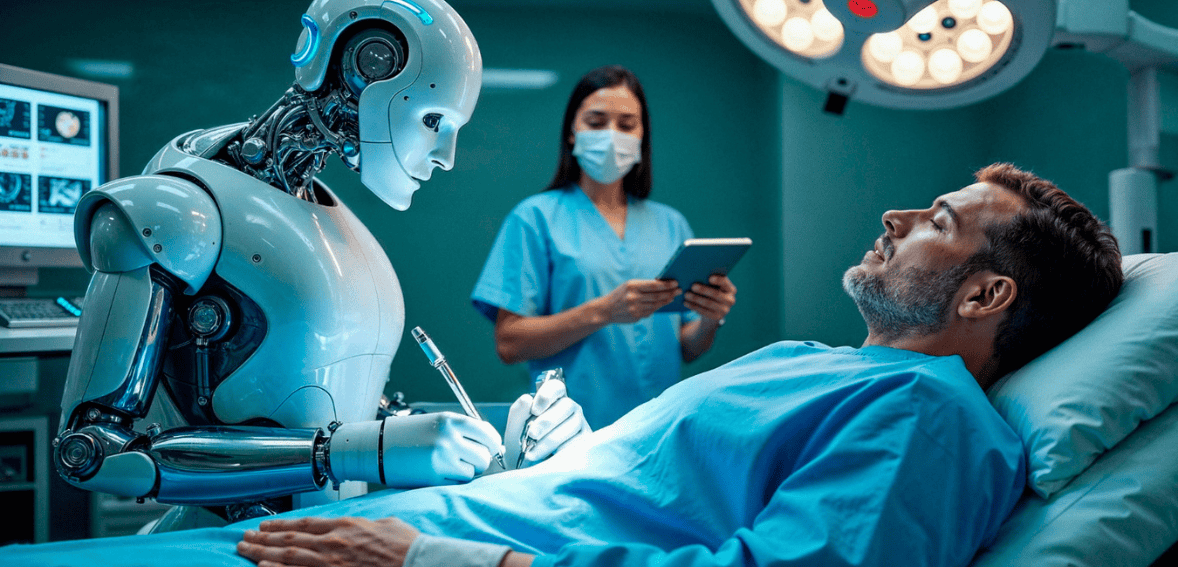
AI in Healthcare: Transforming Clinical Decision-Making
Healthcare is evolving at a pace that few could have imagined a decade ago. Among the most significant developments is the growing role of AI in healthcare, particularly in diagnostic processes. Hospitals, clinics, and research institutions are increasingly relying on advanced algorithms to interpret medical data, detect patterns, and support physicians in making informed decisions. As healthcare systems face increasing patient loads and more complex conditions, technology has become an essential partner rather than just a supportive tool.
AI does not replace the human touch in medicine. Instead, it enhances clinical insight by analyzing large volumes of medical information in seconds. Predictive diagnostics, clinical decision support systems, and machine learning in medicine are redefining how healthcare providers assess risk and confirm diagnoses. Through healthcare automation, repetitive data tasks can be streamlined, allowing clinicians to focus more fully on patient interaction and critical thinking. Together, these innovations are transforming modern clinical decision making.
Understanding the Foundations of AI in Healthcare
AI in healthcare refers to computer systems that perform tasks usually requiring human intelligence. These systems analyze medical images, interpret lab reports, and even predict disease progression. Machine learning in medicine allows algorithms to learn from historical patient data and improve accuracy over time. Instead of following static rules, AI systems refine themselves through exposure to new datasets.
Clinical decision support systems rely on integrated databases, pattern recognition, and evidence based guidelines. Predictive diagnostics use patient history, genetic data, and lifestyle indicators to forecast future risks. Healthcare automation further supports these efforts by managing routine documentation, scheduling, and data processing tasks. This integration enables medical teams to respond more quickly and effectively, particularly in high pressure situations where time matters most.
Predictive Diagnostics and Early Disease Detection
Predictive diagnostics represent one of the most impactful uses of AI in healthcare. By analyzing large populations of patient records, algorithms can detect subtle correlations that may indicate early disease development. Machine learning in medicine helps uncover risk patterns that human analysis might overlook.
Clinical decision support systems incorporate these predictive insights into everyday workflows. For example, a patient’s combination of symptoms, lab values, and medical history may trigger alerts suggesting further testing. Healthcare automation ensures that these alerts are delivered promptly and documented accurately. Predictive diagnostics allow healthcare providers to intervene earlier, often improving patient outcomes and reducing long term costs.
AI Driven Medical Imaging
Medical imaging has been revolutionized by AI in healthcare applications. Radiology departments now use advanced software to evaluate X rays, CT scans, and MRIs. Machine learning in medicine enables pattern recognition at a level of detail that enhances diagnostic precision.
Clinical decision support systems assist radiologists by highlighting suspicious areas for closer examination. Predictive diagnostics can estimate the likelihood that a detected anomaly is malignant or benign. Healthcare automation accelerates image processing, reducing turnaround times. While human professionals remain central to final judgments, AI driven imaging tools provide valuable second opinions and increase confidence in diagnostic conclusions.
Supporting Physicians With Clinical Decision Support Systems
Clinical decision support systems serve as intelligent assistants during patient evaluation. These systems review symptoms, medication history, allergies, and diagnostic test results to provide evidence based recommendations. AI in healthcare ensures that recommendations align with updated medical guidelines.
Machine learning in medicine improves system relevance by learning from previous clinical decisions. Predictive diagnostics help prioritize patients who may require urgent attention. Healthcare automation keeps records organized and accessible, ensuring consistency in documentation. By integrating these systems into everyday practice, healthcare professionals gain rapid access to reliable insights that support confident decision making.
Enhancing Accuracy Through Data Analysis
Modern healthcare generates enormous volumes of data. Laboratory results, wearable device outputs, genetic sequencing, and electronic health records all contribute to complex information ecosystems. AI in healthcare processes these datasets efficiently, identifying patterns that inform patient care.
Machine learning in medicine allows algorithms to refine predictions as more data becomes available. Clinical decision support systems convert these findings into practical guidance. Predictive diagnostics leverage historical trends to estimate progression risks. Healthcare automation ensures that updated patient information feeds directly into AI driven analyses. This continuous loop supports greater accuracy and responsiveness in clinical practice.
The Role of Machine Learning in Medicine
Machine learning in medicine forms the technical backbone of AI applications. Algorithms are trained using vast collections of medical data to recognize symptoms, disease markers, and treatment responses. Instead of relying solely on static rules, these models adapt over time.
AI in healthcare thrives on this adaptive capability. Clinical decision support systems become more precise as they learn from new cases. Predictive diagnostics benefit from evolving statistical modeling that captures emerging trends. Healthcare automation ensures data quality and structure remain consistent for algorithm training. Together, these components create increasingly sophisticated decision making tools.
Reducing Diagnostic Errors
Diagnostic errors remain a significant concern in global healthcare systems. AI in healthcare helps mitigate this risk by offering additional layers of analysis. Machine learning in medicine can detect inconsistencies in symptom presentation or lab values that warrant attention.
Clinical decision support systems flag unusual combinations of findings, prompting further review. Predictive diagnostics assess probabilities based on aggregated outcomes. Healthcare automation ensures that communication between departments occurs without delay. These safeguards create a collaborative relationship between technology and clinicians, reducing the likelihood of overlooked conditions.
Addressing Workflow Efficiency
Healthcare automation improves workflow efficiency by managing repetitive tasks. Appointment scheduling, documentation updates, and billing processes can be partially automated, reducing administrative burden. AI in healthcare allows clinicians to spend more time engaging directly with patients.
Clinical decision support systems integrate seamlessly with electronic health records, minimizing data entry duplication. Machine learning in medicine continuously optimizes resource allocation. Predictive diagnostics help prioritize high risk cases for timely intervention. By streamlining operations, healthcare institutions improve productivity without sacrificing quality.
Ethical Considerations and Data Privacy
The integration of AI in healthcare raises important ethical questions. Data privacy, algorithm transparency, and bias mitigation require continuous oversight. Machine learning in medicine depends on extensive patient data, making secure handling essential.
Clinical decision support systems must remain explainable to maintain clinician trust. Predictive diagnostics should avoid reinforcing existing disparities. Healthcare automation processes must comply with regulatory standards governing sensitive medical information. Responsible development ensures that innovation supports equitable and ethical patient care.
Education and Training for Healthcare Professionals
Adopting AI in healthcare requires education and collaboration. Clinicians must understand how machine learning in medicine functions to interpret system recommendations confidently. Training ensures clinical decision support systems are used appropriately.
Predictive diagnostics tools require contextual understanding to avoid overreliance. Healthcare automation systems also demand operational familiarity. Continuous professional education empowers healthcare teams to integrate advanced technologies effectively while preserving human judgment and compassion.
The Future of AI in Diagnostics
The future of AI in healthcare promises continued advancements in predictive diagnostics and automation. Machine learning in medicine will likely incorporate genomics and personalized treatment modeling. Clinical decision support systems may evolve into even more intuitive platforms integrated with wearable technology.
Healthcare automation will further streamline administrative work, allowing clinicians to focus on therapeutic relationships. As innovation progresses, collaboration between technologists and medical professionals will remain essential. AI supported diagnostics will continue shaping clinical decision making while maintaining the core human values that define healthcare.
Improving Chronic Disease Management
For instance, diabetes, heart conditions, and lung ailments need constant observation and strategic planning for intervention. AI in the healthcare sector makes a substantial contribution to the constant management of diseases by detecting patterns in patient data that could indicate deterioration. Machine learning in the medical sector analyzes lab trends, compliance with medication, and lifestyle factors to forecast possible complications before they become emergencies.
Clinical decision support systems combine predictive diagnosis with long-term care strategies. For instance, slight changes in blood sugar or blood pressure levels can initiate early notifications for medical professionals. Healthcare automation ensures that these notifications are distributed immediately and recorded in patient files. Thus, AI in the healthcare sector makes a significant contribution to improving the quality of life for patients with chronic ailments by reducing hospitalization rates and overall healthcare costs in the long term.
AI in Emergency and Critical Care Settings
The emergency department is a situation where the time factor is a priority, and quick and correct decisions are crucial. AI in healthcare helps doctors by rapidly processing the current symptoms, past medical history, and available test results. Machine learning in healthcare can enable the prioritization of patients according to risk models that assess severity factors in real-time.
Clinical decision support systems provide treatment options according to established guidelines, which assist hospital staff in making effective decisions in high-volume situations. Predictive diagnostics provide risk estimates of potential complications that may not be visible to the naked eye. Healthcare automation enables the preparation of patient records so that emergency staff can directly attend to patients. In intensive care units, predictive monitoring systems help detect trends that may forecast deterioration, allowing for early intervention.
Personalized Medicine and Treatment Planning
Among the most promising uses of AI in the healthcare industry is personalized medicine. While current treatments are generalized, AI in medicine can analyze genetic information, lifestyle information, and past treatment outcomes. This enables personalized recommendations based on predictive diagnostics.
Clinical decision support systems combine multiple complex data sets into a course of treatment. Healthcare automation ensures that the latest information is constantly fed into algorithmic evaluations. Personalized approaches improve treatment success and prevent the need for unnecessary changes to treatment. By moving away from a one-size-fits-all approach to personalized medicine, AI enables a better alignment of treatments. Patients will receive treatment based on their individual biological and lifestyle characteristics, ultimately leading to greater patient engagement and satisfaction with treatment plans.
Research Advancements and Continuous Learning
AI also speeds up medical research by processing huge amounts of data from clinical trials and real-world evidence studies. AI in the medical field recognizes trends in patient populations much faster than conventional statistical methods. Machine learning in the medical field examines patterns from thousands of patient treatment outcomes to identify promising therapeutic directions.
Clinical decision support systems are also improved by this constant integration of research findings, as new evidence is cycled back into recommendation systems. Predictive diagnostics are made more accurate by being informed of new research findings that have been published. Healthcare automation prepares research data in forms that are amenable to training AI algorithms. This closed-loop learning system ensures that findings from research are quickly applied in the clinical setting. As AI continues to advance, it will become an essential part of closing the discovery-to-delivery gap, strengthening an agile and evidence-based healthcare system.
Conclusion
AI is not a replacement for medical expertise but a powerful complement. AI in healthcare strengthens predictive diagnostics and enhances clinical decision support systems. Machine learning in medicine transforms raw data into meaningful insights. Healthcare automation reduces operational friction, supporting efficiency and consistency. By integrating these tools thoughtfully, healthcare providers gain greater diagnostic precision and earlier intervention capabilities. The ultimate goal remains the same as it has always been: delivering compassionate, accurate, and timely care. AI simply provides new pathways toward achieving that mission more effectively and sustainably.